Should you need urgent health advice please contact your GP or call NHS 111. In an emergency please visit A&E or call 999
Nottinghamshire Healthcare NHS Foundation Trust is responsible for the writing, publishing and updating of the content on this page.
It is important that parents, young people and students know their meningitis vaccination status.
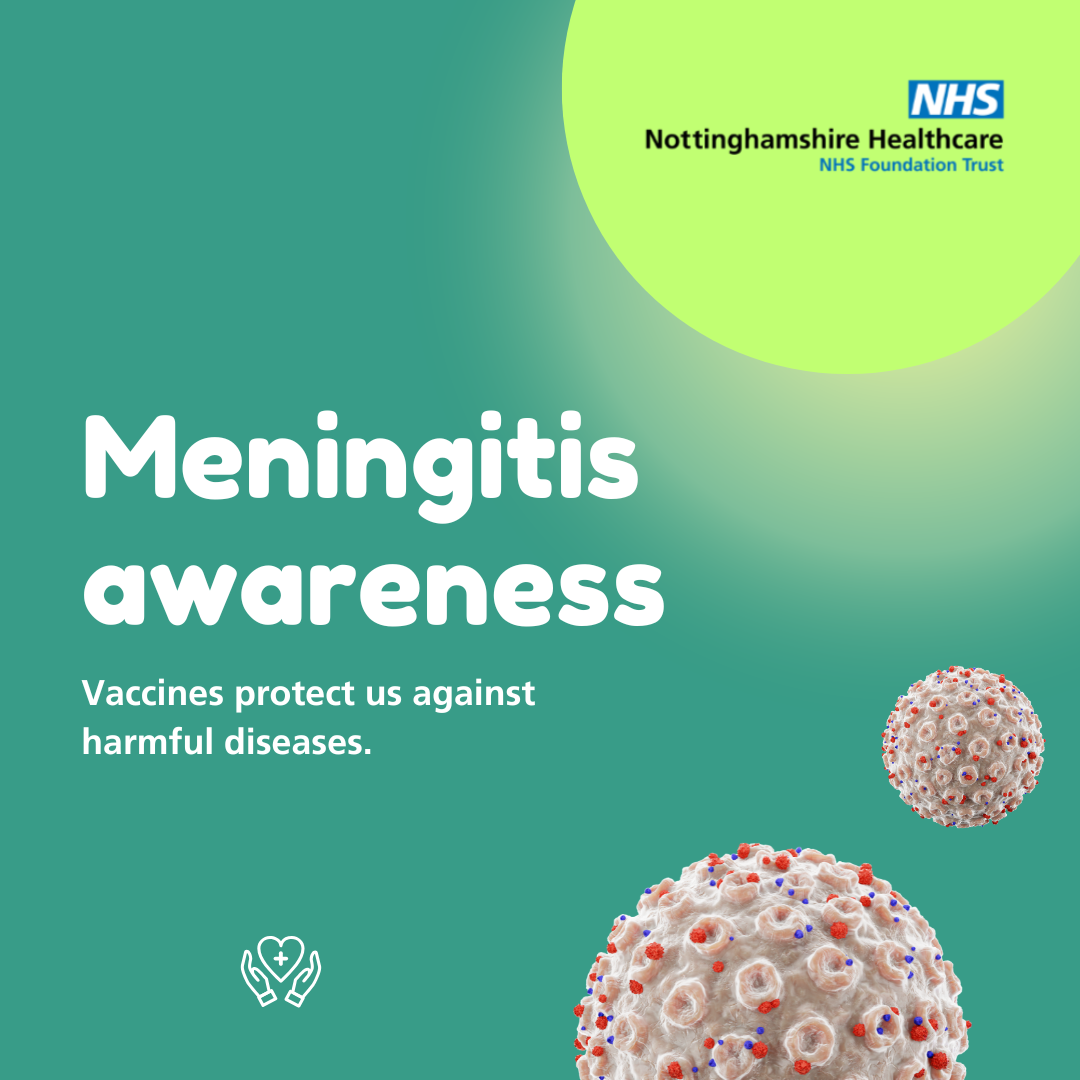
It is important that parents, young people and students know their meningitis vaccination status.
Meningitis can be very serious if not treated quickly and can cause life-threatening sepsis and result in permanent damage to the brain or nerves.
It can affect anyone but is most common in babies, young children, teenagers and young adults.
Vaccinations offer some protection against certain causes of meningitis. These include the:
Please be aware of the following symptoms of meningitis to look out for. They develop suddenly and can include:
These symptoms can appear in any order and you do not always get all the symptoms.
Call 999 for an ambulance or go to your nearest A&E immediately if you think you or someone you look after could have meningitis or sepsis.
Infections that cause meningitis can be spread through:
Meningitis is usually caught from people who carry these viruses or bacteria in their nose or throat but are not ill themselves.
It can also be caught from someone with meningitis, but this is less common.
You can find out more about meningitis on the NHS website.